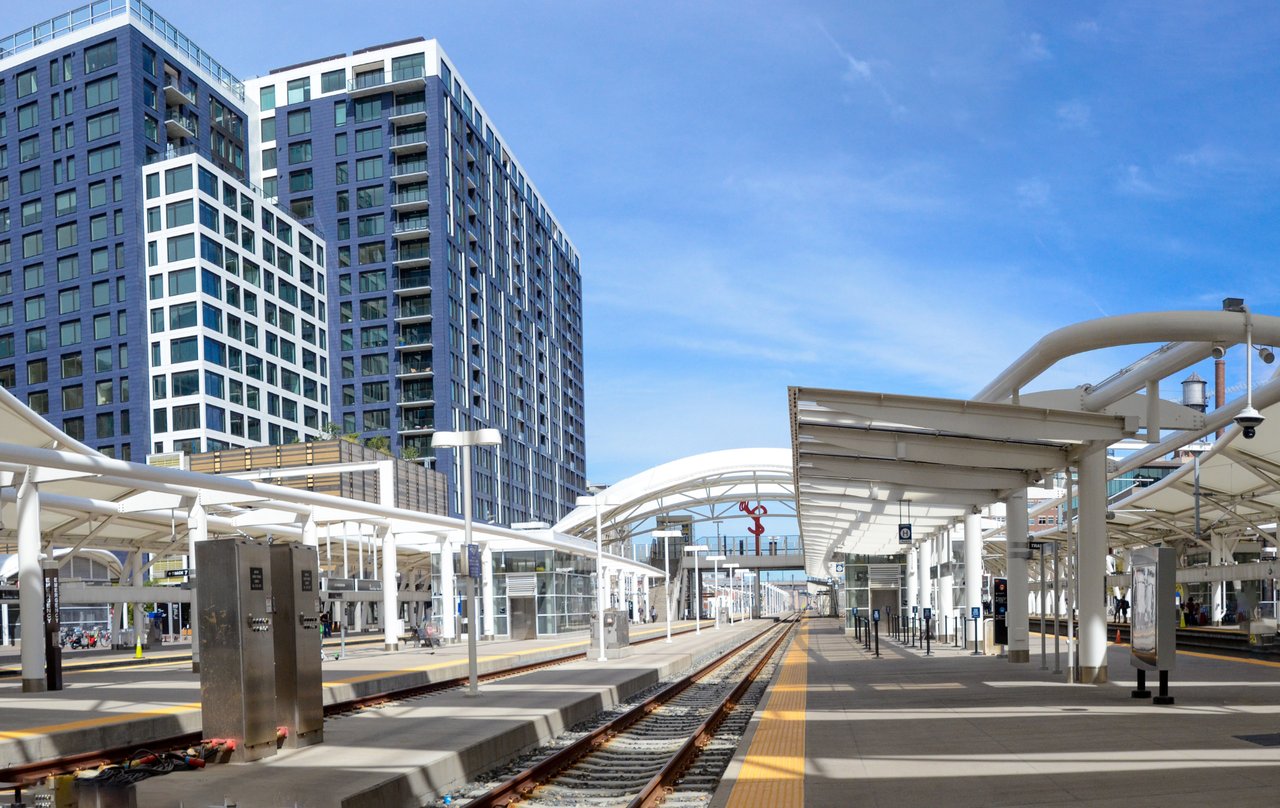
Colorado's Front Range Passenger Rail District dropped a number this week that instantly reframed the state's biggest transit conversation: $5 billion. That's the full build-out cost of the Colorado Connector — known as CoCo — the proposed passenger train meant to link Fort Collins to Pueblo along the I-25 corridor. But the $5 billion figure isn't one bill. It's three, stacked on top of each other, and only one of them is actually guaranteed to happen.
Here's what's locked in, what's on the ballot this November, and what it would take for Colorado to build the full system.
What Is the Colorado Connector (CoCo)?
The Colorado Connector is a proposed intercity passenger rail line running roughly 190 miles along the Front Range, linking 12 communities from Fort Collins in the north to Pueblo in the south, with a longer-term vision of reaching Cheyenne, Wyoming and New Mexico.
The project traces back to 2021, when the Colorado legislature passed Senate Bill 21-238, creating the Front Range Passenger Rail District — a public agency with the authority to plan, finance, build, and operate the line, and to ask voters to fund it through a dedicated tax. The train got its public nickname, CoCo, after more than 25,000 people voted in a public naming contest earlier this year.
“We expect the trains to be full.” — Sal Pace, General Manager, Front Range Passenger Rail District
The $5 Billion Breakdown: Three Phases, Three Very Different Odds
Phase 1 — $332 Million (Happening Regardless)
This phase is already funded through existing RTD and Colorado Transportation Investment Office tax and fee revenue — no new taxes, no ballot measure required. Starting in 2029, three daily round trips will run between Denver's Union Station and Fort Collins, with stops in Westminster, Broomfield, Louisville, Boulder, Longmont, and Loveland.
Phase 2 — $1.7 Billion (On the November Ballot)
This is where the project's future actually gets decided. Phase two extends service south from Denver to Colorado Springs and Pueblo, adding stops in Littleton and Sterling Ranch, with two daily round trips targeted for 2032. But it only happens if voters approve a new 0.333% sales tax on communities within five miles of a station. The Front Range Passenger Rail District board is set to consider the full plan on July 31, then vote August 28 on whether to refer the tax to the November ballot.
A 0.333% tax on communities within 5 miles of a station would raise close to $300 million a year — but only if it passes in November.
Phase 3 — $2.7 Billion (The Aspirational Build)
The final phase is the one that gets Colorado to the full $5 billion headline: it doesn't add new stops, but it dramatically increases frequency — up to 10 round trips a day to Fort Collins and 8 to Pueblo — plus the long-term possibility of extending service to Cheyenne, Trinidad, and New Mexico. There's no funding source identified for this phase yet; it's the long-range vision, not a funded plan.
Why This Matters for Denver
Denver sits at the center of every phase of this plan — Union Station is the anchor point for the entire system. For commuters stuck in I-25 bottlenecks between the northern suburbs and downtown, or watching the same conversation happen for the southern corridor toward Colorado Springs, this is the closest the region has come to a funded alternative in decades. It's also a preview of a familiar Colorado pattern: base-level service gets built with existing money, and everything more ambitious gets pushed to voters.
Key Dates to Watch
- July 31, 2026 — FRPRD board reviews the full service and financing plan
- August 28, 2026 — Board votes on whether to refer the 0.333% tax to voters
- November 2026 — Ballot measure decides Phase 2 funding
- 2029 — Phase 1 service begins (Denver–Fort Collins)
- 2032 — Targeted start of Phase 2 service (Denver–Colorado Springs–Pueblo), contingent on the vote
FREQUENTLY ASKED QUESTIONS
How much will the Colorado Connector (CoCo) train cost?
The full build-out is estimated at $4.7 billion to construct, plus up to $200 million a year to operate. That total breaks into three phases: $332 million (funded, no new taxes), $1.7 billion (contingent on a November 2026 tax vote), and $2.7 billion (long-range, unfunded).
Is there a new tax for the CoCo train?
A 0.333% sales tax is proposed for communities within five miles of a CoCo station. It would need voter approval in November 2026 and is projected to generate about $295 million a year. It only funds Phase 2 of the project.
When does the Colorado Connector start running?
Phase 1 service between Denver's Union Station and Fort Collins is expected to begin in 2029 with three daily round trips, regardless of the November tax vote. Phase 2 service south to Colorado Springs and Pueblo targets 2032, but only if voters approve the new tax.
What stops will the CoCo train have?
Confirmed stops include Fort Collins, Loveland, Longmont, Boulder, Louisville, Broomfield, Westminster, and Denver's Union Station in Phase 1, with Littleton, Sterling Ranch, Colorado Springs, and Pueblo added in Phase 2.
Who runs the Front Range Passenger Rail District?
The Denver Downtown Development Authority (DDDA) is a tax increment financing district authorized to issue bonds for downtown revitalization. Approved by property owners in 2023, it has $570 million in total bond authorization. Funds are deployed as low-interest loans to qualifying private development and public improvement projects, repaid through future property and sales tax revenues generated by the projects themselves. As of mid-2026, approximately $242 million has been approved, with roughly $328 million remaining.
The Front Range Passenger Rail District (FRPRD) was created by the Colorado legislature in 2021 under Senate Bill 21-238. It's a public agency with authority to plan, finance, build, and operate the rail line, and its general manager is Sal Pace.
Follow The Denver Group for continuing coverage of the CoCo vote and every transit and development story shaping the Front Range before it hits mainstream headlines.
Visit our website for more frequently asked questions.
👉 Schedule a consultation with The Denver Group
👉 Explore Denver neighborhoods
👉 View the Denver Neighborhood Guide
Source: Axios Denver, “Colorado Connector carries a $5B price tag” (John Frank, July 20, 2026); Front Range Passenger Rail District; Colorado Sun; Colorado General Assembly, SB21-238.
Published by The Denver Deal | thedenverdeal.com | Real estate coverage by The Denver Group | denvergroupre.com