Looking for a place that feels a little more personal without giving up city access? Edgewater stands out for exactly that reason. If you are exploring homes near Denver and want walkability, local businesses, and quick access to Sloan’s Lake, this small Jefferson County city deserves a closer look. Here’s what to know about Edgewater real estate, how the housing mix is changing, and why so many buyers keep it on their shortlist.
Why Edgewater Feels Different
Edgewater is an incorporated city in Jefferson County with about 5,005 residents and 2,589 housing units packed into just 0.7 square miles. That compact footprint is a big part of its identity. You are not looking at a sprawling suburb here. You are looking at a small city with its own character, tucked between Denver, Wheat Ridge, and Lakewood.
The city itself describes Edgewater as a small town next to the big city. That idea shows up in how residents talk about it too. In the city’s 2023 community survey, common reasons for living there included location, small-town feel, access to dining and entertainment, and neighborhood character.
For buyers, that often translates into a lifestyle decision as much as a real estate one. You may be drawn to the convenience of nearby Denver, but want a setting that feels a bit more close-knit day to day.
Edgewater and Sloan’s Lake Access
One of Edgewater’s biggest draws is its relationship to Sloan’s Lake. The city has highlighted pedestrian improvements, traffic-calming work, and multimodal planning that includes safer access toward Sloan’s Lake Park. If being able to get outside, move around on foot, and stay connected to nearby amenities matters to you, that is an important part of the story.
Walkability is not just a marketing term here. It is an explicit city priority. Sidewalk improvements and corridor planning around Sheridan Boulevard point to a local focus on making everyday movement easier and safer.
That matters because location is only part of what makes a neighborhood livable. The way you actually experience errands, outings, and weekend routines can shape whether a place feels easy to enjoy over time.
Daily Life Around 25th Avenue
Edgewater’s neighborhood-serving business activity is centered along 25th Avenue. The city’s history materials point to this corridor as a long-running part of local commercial life. That gives the area a familiar, main-street feel that many buyers appreciate.
Edgewater Public Market is another major anchor in the city’s day-to-day lifestyle. It describes itself as a mix of local food stalls, retail boutiques, wellness tenants, and events. For residents, that means you have a built-in gathering spot that supports a more walkable and social routine.
If you are comparing locations across west metro Denver, this is where Edgewater often separates itself. It offers a compact experience where dining, retail, and recreation feel woven into daily life rather than spread far apart.
Edgewater Housing Styles
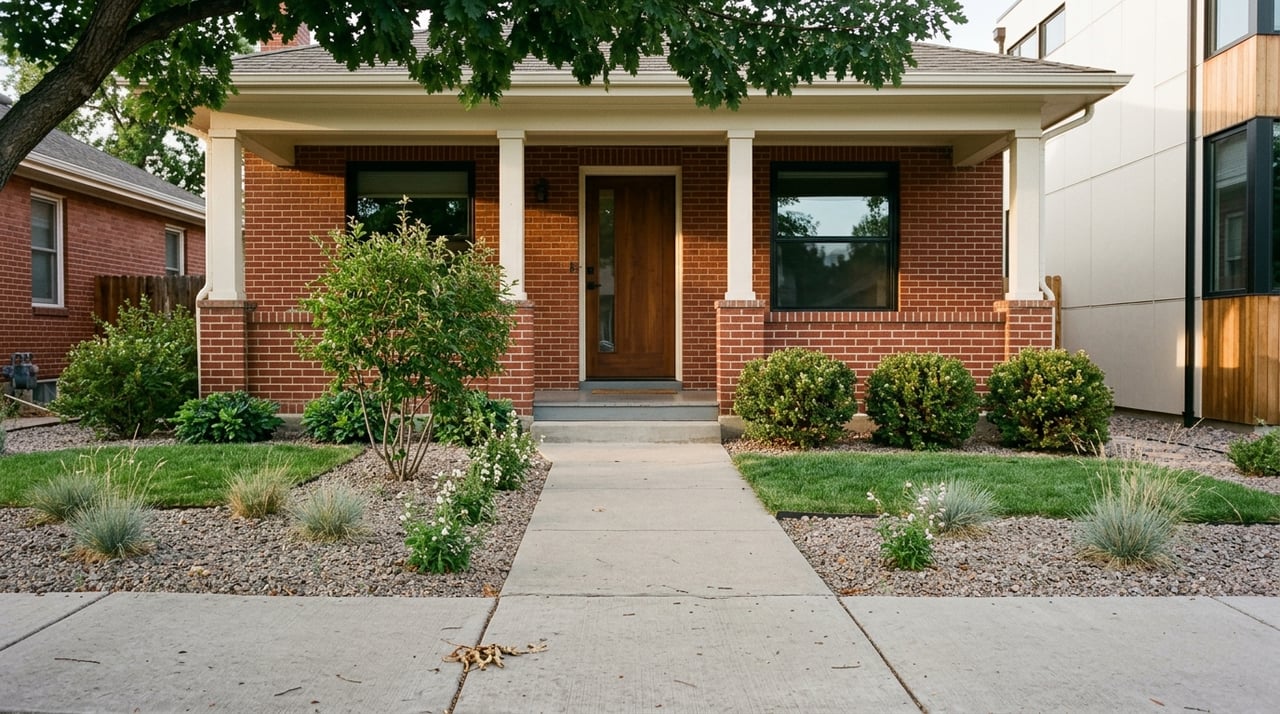
Edgewater’s housing stock is part of its appeal, especially if you like variety. City planning materials describe a pattern of single-family neighborhoods, with multi-family and commercial uses mostly around the perimeter. The city is also known for historic homes, some dating back to its early years.
In practical terms, that means you may see older detached homes, historic properties, townhomes, and newer infill depending on the block. Some streets feel rooted in the city’s earlier development pattern, while others reflect more recent redevelopment.
That mix can be attractive if you want options beyond one uniform housing type. It also means buyers should pay close attention to micro-location, lot size, street feel, and nearby development, because the experience can shift from one pocket to the next.
How Edgewater Is Changing
Like many close-in communities near Denver, Edgewater is evolving. Current planning work notes that the historic development pattern often featured smaller homes on relatively large lots. More recent redevelopment has sometimes resulted in much larger homes without adding much housing diversity or affordability.
In response, the city’s zoning rewrite is exploring options such as accessory dwelling units, cottage clusters, and other missing-middle housing forms. Edgewater also adopted its 2040 Comprehensive Plan in September 2024. For buyers and owners, that signals a city actively thinking about how to balance growth, housing choice, and neighborhood form.
You can already see parts of that evolution in newer infill activity. One recent rezoning file referenced a project with 178 single-family detached units and 110 townhomes. The broader takeaway is that Edgewater is not frozen in time. It is a mature small city still shaping what its next chapter looks like.
Edgewater Home Prices and Market Pace
Pricing in Edgewater remains relatively firm, though it is important to read market numbers carefully. Zillow estimated a typical Edgewater home value at $592,612 as of May 31, 2026. Redfin reported a recent median sale price of $694,584, up 13.8% year over year, with homes averaging 8 days on market over its latest three-month window.
Those figures measure different things, so they should not be treated as interchangeable. Still, together they suggest a market where demand has remained meaningful and well-priced homes can move quickly. If you are buying, preparation matters. If you are selling, thoughtful pricing and presentation still matter just as much.
This is where local guidance becomes especially useful. In a compact market like Edgewater, broad metro trends only tell part of the story. Block-by-block differences, property condition, and housing type can have a big impact on value.
Edgewater vs Lakewood and Nearby Denver Areas
Many buyers considering Edgewater are also looking at Lakewood or nearby Denver neighborhoods. These areas can all be appealing, but they offer different experiences. Understanding those differences can help you focus your search.
Lakewood is much larger, with about 156,000 residents across 44 square miles. Compared with Edgewater’s 0.7 square miles, Lakewood offers far more scale and geographic spread. You may find more variety in housing pockets and a broader suburban footprint, but not the same compact small-city feel.
Nearby Denver neighborhoods are different again because they are part of the City and County of Denver rather than a separate municipality. Denver’s West Area Plan describes nearby west-side neighborhoods as lower-scale residential areas connected by a few commercial streets. For some buyers, a Denver address is a priority. For others, Edgewater’s independent identity is a better fit.
Platform estimates also suggest a pricing gradient around Edgewater. Zillow’s neighborhood view places Sloan Lake around $810K, West Highland around $791K, West Colfax around $629K, Northeast Lakewood around $468K, and Villa Park around $419K. These figures are directional, not direct substitutes for comparable sales, but they can help frame where Edgewater sits in the broader landscape.
What Buyers Should Watch in Edgewater
If Edgewater is on your radar, it helps to look beyond the headline. A small market can create strong appeal, but it also means inventory, home style, and pricing can vary quickly.
Here are a few smart things to watch:
- Block-by-block differences in home style, lot size, and redevelopment activity
- Access to 25th Avenue and Edgewater Public Market if walkability is a priority for you
- Proximity to Sloan’s Lake connections and other day-to-day routes
- Older home condition if you are considering a historic or long-owned property
- Newer infill design and layout if you want lower maintenance or more modern finishes
A neighborhood like Edgewater tends to reward buyers who get specific. Instead of asking whether the city is a fit in general, it is often better to ask which part of Edgewater best matches your lifestyle and budget.
Why Sellers Benefit From Edgewater’s Identity
For sellers, Edgewater’s appeal is more than just proximity to Denver. Buyers often respond to the city’s distinct identity, compact layout, and access to dining and recreation. That means your home is usually part of a broader lifestyle story, not just a property search.
The key is presenting that story clearly and credibly. In a market with older homes, historic homes, townhomes, and newer infill, strong positioning matters. Buyers need to understand what is unique about your home, how it fits into the local housing mix, and why your specific location within Edgewater adds value.
That is where thoughtful marketing, clean pricing strategy, and local context can make a real difference. Especially in a small city, buyers tend to notice the details.
If you are considering a move in or around Edgewater, working with a team that understands Denver’s close-in neighborhoods and nearby suburbs can help you compare options with more confidence. The Denver Group offers calm, strategic guidance for buyers, sellers, and investors who want a smart, well-supported experience.
FAQs
What makes Edgewater, CO different from Lakewood?
- Edgewater is a compact independent city of about 5,005 residents in 0.7 square miles, while Lakewood is much larger at about 156,000 residents across 44 square miles, so the overall feel and scale are very different.
What is the housing mix like in Edgewater, CO?
- Edgewater includes older detached homes, historic homes, townhomes, and newer infill, with multi-family and commercial uses more common around the perimeter and the exact mix varying by block.
Is Edgewater, CO walkable for daily errands and outings?
- Walkability is a city priority, with sidewalk improvements, traffic-calming work, and planning efforts tied to safer pedestrian access and everyday movement.
How close is Edgewater, CO to Sloan’s Lake?
- Edgewater sits next to the Sloan’s Lake area, and city planning efforts specifically reference safer pedestrian access toward Sloan’s Lake Park.
What are Edgewater, CO home prices like?
- Recent pricing signals have remained firm, with Zillow estimating a typical home value of $592,612 and Redfin reporting a recent median sale price of $694,584, though those figures reflect different methodologies.
Why do people choose to live in Edgewater, CO?
- In the city’s 2023 community survey, residents most often cited location, small-town feel, access to dining and entertainment, and neighborhood character as reasons for living there.