If you want walkability, character homes, and a short commute downtown, living in Denver proper is the better fit. If school-district consistency, more space per dollar, and newer construction matter more, the suburbs usually win. Prices are closer than most people expect: as of spring 2026, the City of Denver's median single-family price was around $600,000, versus roughly $550,000–$650,000 in suburbs like Highlands Ranch, Parker, and Littleton.
The single biggest mix-up we see from people moving here: they treat "Denver" as one decision. It's actually two. The City and County of Denver and the surrounding suburbs are different cities with different school districts, different property taxes, different price points, and very different day-to-day lives. Getting this wrong costs people time and money, and sometimes lands them somewhere that doesn't fit how they actually live.
Here's how we break it down with clients, from what "Denver" means on a map to who should pick which side.
Where to Live in Denver: The City or the Metro?
The City of Denver is its own municipality, with its own mayor and its own school district, Denver Public Schools (DPS). Highlands Ranch, Parker, Lone Tree, Arvada, Lakewood, Littleton, Cherry Hills Village, and Greenwood Village are all part of the Denver metro, but they aren't Denver. Highlands Ranch sits in Douglas County. Littleton is in Arapahoe County. Each comes with its own taxes, schools, and rules.
So when someone tells us they want to live in Denver, our first question is always: do you mean the city, or the metro? Those are two very different answers.
Lifestyle: What Daily Life Looks Like
Living in the City of Denver
- More walkable, with coffee, restaurants, bars, and entertainment often within a few blocks.
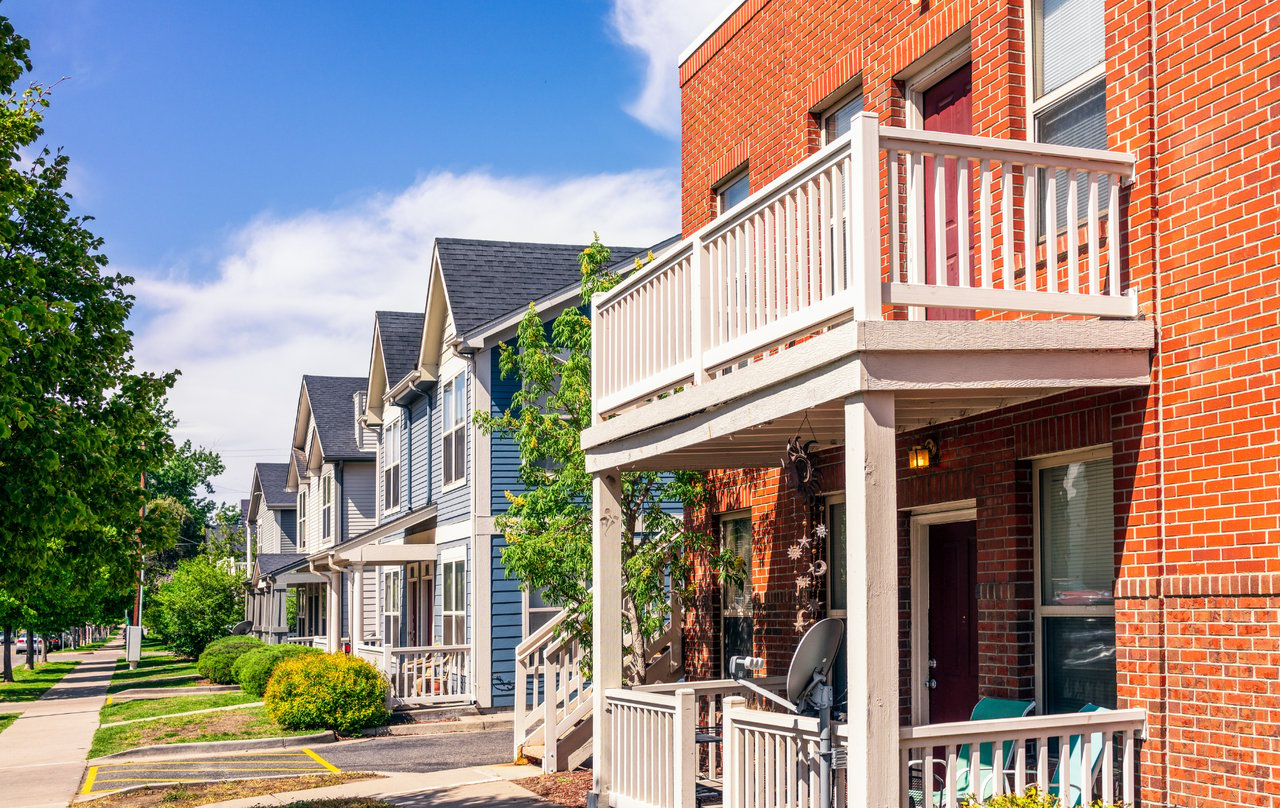
- Older homes with character: bungalows, Victorians, Denver Squares, and mid-century ranches.
- A mix of neighbors, including young professionals, creatives, families, and long-time owners.
- Smaller yards and less square footage. You're paying for location.
The city tends to fit people coming from larger cities like New York, Chicago, San Francisco, or Austin who want to keep that urban energy.
Living in the Suburbs
- More square footage, bigger yards, and more new construction.
- Planned communities with trails, pools, rec centers, and HOAs.
- Quieter and more family-oriented, with less maintenance and open floor plans.
- More car-dependent. You'll drive to most things.
The suburbs tend to fit families coming from the South, the Midwest, or the suburbs of another major city. The honest trade-off: the city gives you vibrancy with less space, and the suburbs give you space with more time in the car. Neither is wrong. It comes down to your life.
Denver City vs. Suburbs: Home Prices in 2026
As of spring 2026, the median single-family home in the city ran around $600,000. In neighborhoods like Wash Park or the Highlands, that jumps to roughly $750,000 to $1 million, and areas like Country Club go well beyond that. You'll typically get smaller lots and older homes in established, walkable neighborhoods. Condos and townhomes were strong in the $400,000 to $550,000 range, at a higher price per square foot.
In the suburbs, Highlands Ranch ran roughly $600,000 to $650,000, and Parker and Littleton roughly $550,000 to $620,000. Lone Tree ran a bit higher thanks to its proximity to the Denver Tech Center, and Cherry Hills Village and Greenwood Village sit significantly higher. Many suburban homes are newer builds with less deferred maintenance.
The takeaway: price points are closer than most people expect. The real difference is what you get for the money, not the number itself.
Denver city vs. suburbs at a glance (approximate, spring 2026)
Denver Schools vs. Suburban School Districts
DPS is a large district, and school quality varies a lot by neighborhood. Strong schools absolutely exist, but you have to research individual schools, not just the district. Denver also has a robust charter scene and a strong private school market. (For a deeper look, see our guides to DPS boundary schools vs. enrollment zones and Denver private schools.)
Suburban districts like Douglas County, Cherry Creek, and Littleton Public Schools are consistently ranked among the top in Colorado, with less variation from school to school and newer facilities in many areas. On school-district consistency, the suburbs win. It's one of the main reasons families choose them.
Commute: Who Wins on Convenience
If you work downtown, the city wins easily. You can walk, bike, take RTD, or make a short drive. From the south suburbs, a rush-hour commute downtown on I-25 can run 45 to 75 minutes each way. If you work at the Denver Tech Center, Lone Tree and Highlands Ranch are far better positioned. If you work remotely, the suburbs suddenly make a lot more sense.
One tip we give every client: do your commute test on a Tuesday morning, not a Saturday. Where you work should be one of the first questions you answer.
The Verdict: Should You Live in Denver or the Suburbs?
Choose the city if you want to walk to restaurants, coffee, and culture; you're coming from an urban environment and that energy matters; you want a short commute downtown; and neighborhood character matters more than square footage.
Choose the suburbs if school-district consistency is a priority; you want more space per dollar; you work at DTC, Lone Tree, or Highlands Ranch; you work remotely and value space over proximity; or you want newer construction and lower maintenance.
Start with how you actually live every day, and let that make the decision, not the zip code. Both sides can give you a great life here.
Frequently Asked Questions
Is Highlands Ranch part of Denver?
No. Highlands Ranch is an unincorporated community in Douglas County. It's part of the Denver metro area but not the City of Denver, so it has different schools, property taxes, and local government.
Are homes cheaper in the Denver suburbs than in the city?
Not always. As of spring 2026, median prices in suburbs like Highlands Ranch, Parker, and Littleton were similar to the City of Denver's median of around $600,000. The difference is usually what you get for the money: suburbs tend to offer more square footage and newer homes, while the city offers walkability and location.
Which has better schools, Denver or the suburbs?
Suburban districts such as Douglas County, Cherry Creek, and Littleton Public Schools are more consistent overall. Denver Public Schools has strong individual schools, but quality varies by neighborhood, so buyers should research specific schools rather than the district as a whole.
How long is the commute from the Denver suburbs to downtown?
From the south suburbs, a rush-hour drive to downtown Denver on I-25 commonly runs 45 to 75 minutes each way. Suburbs like Lone Tree and Highlands Ranch are much closer to the Denver Tech Center.
Visit our website for more frequently asked questions.
👉 Schedule a consultation with The Denver Group
👉 Explore Denver neighborhoods
👉 View the Denver Neighborhood Guide
Sources
About the Author
Jason Dalbey is Team Lead of The Denver Group and has been a Denver real estate broker for more than 11 years, helping hundreds of clients buy, sell, and relocate across the Denver metro. He explains the city, the market, and the deal on YouTube at @jasonindenver. Contact The Denver Group to talk through your move.
Published by The Denver Deal | thedenverdeal.com | Real estate coverage by The Denver Group | denvergroupre.com