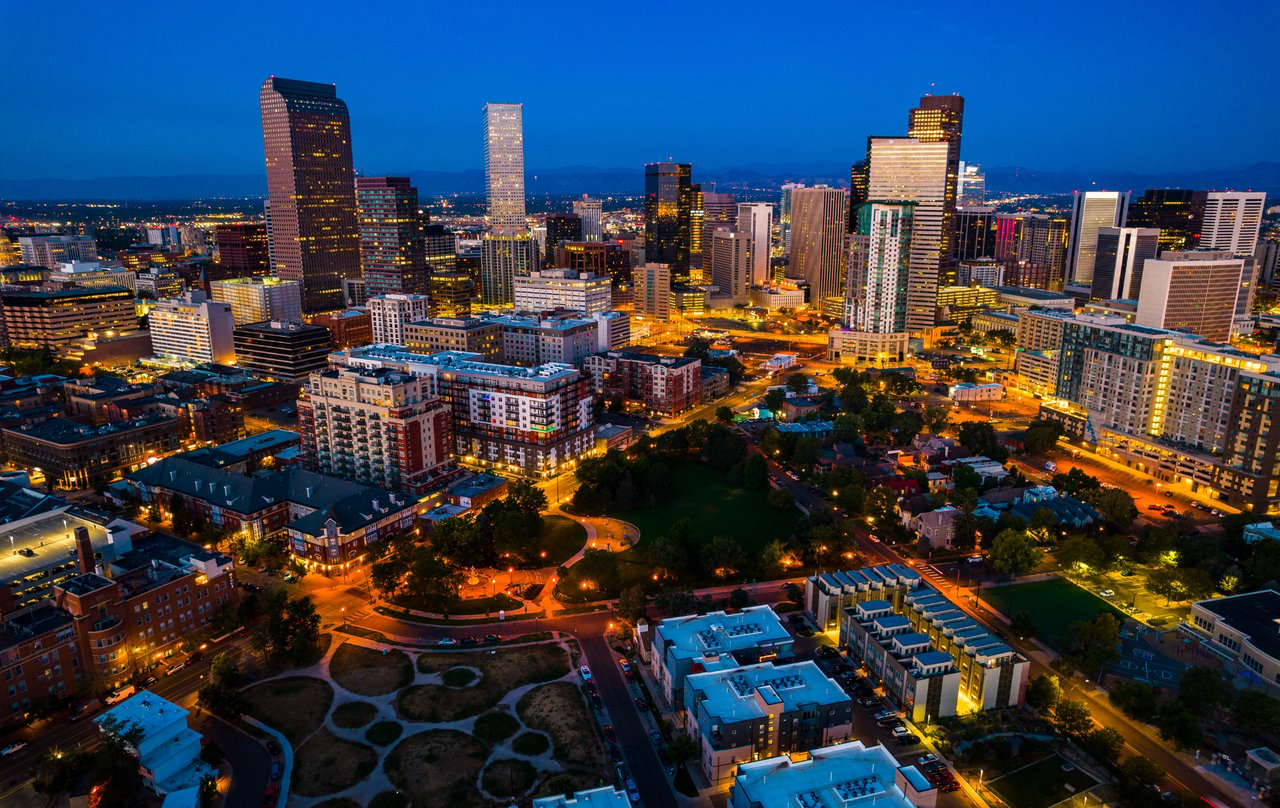
Moving to Colorado still makes sense for many people, just fewer than before. Last year, Colorado saw negative net domestic migration for the first time since 2004, driven mainly by housing costs. Growth is shifting to Weld and Douglas counties, while Denver, Arapahoe, Jefferson, and Boulder are losing residents to other states.
Something happened in Colorado last year that hadn't happened since 2004: more people moved out of the state than moved in. Depending on your zip code, that either means nothing to you or it's exactly why your neighbor just loaded a U-Haul for Texas. Here's what the data actually shows, and why the answer to "Is Colorado still cool?" depends on who's asking.
Colorado Migration Numbers: What Changed
In 2015, Colorado gained about 68,000 new residents through net migration. People came from California, Texas, the Midwest, and the coasts faster than the state could build housing. By 2025, net migration had fallen to about 13,500, roughly an 80% drop in a decade.
Then the streak broke. Last year, net domestic migration turned negative for the first time since 2004: about 12,100 more people left for other states than arrived. Arapahoe and Denver counties alone accounted for close to 18,000 of that net loss. The state still grew, adding about 33,000 people from 2024 to 2025, but that's a fraction of the pace that made Colorado famous.
Where Growth Is and Isn't Happening
- Growing: Weld County (+8,600) and Douglas County (+7,100).
- Shrinking: Jefferson County (−600), Boulder County (−550), and Eagle County (−480).
The pattern is clear. Growth is concentrating in the suburban and exurban fringe, while the counties that defined Colorado's boom are stalling. (Water supply is a big part of which fringe areas can keep growing. More on that in Colorado's water crisis and where to buy.)
Colorado county population change, 2024–2025 (verify against State Demography Office)
Why People Are Moving Out of Colorado
The number-one reason is housing. Denver has priced out many of its own young people, who are leaving to afford homeownership somewhere else. Colorado's median home price runs roughly six to seven times median household income. A healthy market sits around three to four, and we've been above five for years.
It shows up elsewhere, too. Denver condo prices are down about 14% from their 2022 peak. Metro office vacancy sits around 29%, but the downtown core is closer to 39%, one of the highest rates of any major U.S. city. Developers like Asher Luzzatto have been buying downtown office towers at steep discounts.
Then there's what doesn't fit on an affordability chart: more visible homelessness downtown, more frequent ozone alerts, wildfire smoke as a seasonal expectation, and I-25 traffic that has become life-altering for long-distance commuters. None of this means Colorado is broken. It means Colorado changed faster than its systems could handle.
Is Anyone Fixing It?
Yes, and it doesn't get enough attention. Four things are moving:
- Housing: the legislature has passed multiple bills pushing density and limiting local zoning that blocks multifamily construction. It's slow, but the conversation has shifted from whether to build more to how to build faster.
- Transit: RTD reached a deal with BNSF for Denver-to-Fort Collins starter rail targeting 2029. The longer-term vision, the Colorado Connector, would eventually link Fort Collins to Pueblo if funding comes through.
- Energy: Buckley Space Force Base in Aurora was selected as one of the first U.S. sites for a military nuclear microreactor.
- Downtown: Mayor Johnson's Vibrant Denver plan targets filling 3 million square feet of empty office space, the 16th Street Mall renovation is finally done, and office-to-residential conversions are in the pipeline.
The honest pattern: Colorado's problems are mostly problems of success. Too many people wanted in, too fast, for the infrastructure to keep up. What we're watching now is the correction.
Is Moving to Colorado Still Worth It?
It depends entirely on who's asking.
- If you're 25, earning $55,000, and want a house near Denver: it's harder than it's ever been. You're competing with remote workers on coastal salaries, investors, and owners rolling years of equity into their next purchase.
- If you're 35, earning $120,000, and moving from Seattle or San Francisco: Colorado can still be a relative bargain. The mountains, the sun, and the lifestyle still work for you.
- If you already live here: it comes down to what you value. If pure affordability and space matter most, the data shows people answering the call of Texas and the Southeast. If you value the mountains, sunshine, and outdoor culture, Colorado still gets the big things mostly right.
The honest verdict: Colorado is still cool, just for fewer people than before. Thirty years as the automatic answer to "where should I move?" is over. The real question is whether we manage the slowdown well: build the housing, fix the transit, and solve affordability before the people who make this place interesting end up somewhere else.
Frequently Asked Questions
Are more people leaving Colorado than moving in?
Yes. In the most recent year of state data, Colorado had negative net domestic migration for the first time since 2004, with about 12,100 more people leaving for other states than arriving, though the state's total population still grew.
Which Colorado counties are growing the fastest?
Weld County and Douglas County led recent growth, adding about 8,600 and 7,100 residents respectively. Jefferson, Boulder, and Eagle counties lost population.
Why are people leaving Denver?
Housing affordability is the biggest driver. Colorado's median home price is roughly six to seven times median household income, well above the three-to-four range considered healthy, and many younger residents are leaving to afford homeownership elsewhere.
Is Colorado still a good place to move in 2026?
For many buyers, yes, especially those with higher incomes relocating from pricier coastal markets. For first-time buyers on local salaries, affordability is harder than ever. It depends on your budget and how much you value Colorado's outdoor lifestyle.
Sources
Keep Reading
About the Author
Jason Dalbey is Team Lead of The Denver Group and has been a Denver real estate broker for more than 11 years, helping hundreds of clients buy, sell, and relocate across the Denver metro. He explains the city, the market, and the deal on YouTube at @jasonindenver. Contact The Denver Group to talk through your move.
Published by The Denver Deal | thedenverdeal.com | Real estate coverage by The Denver Group | denvergroupre.com