On the last Saturday morning of August, more than fifty dragon boat teams lined up on Sloan's Lake for the 26th running of the Colorado Dragon Boat Festival, this year built around a Year of the Fire Horse theme of energy and resilience. Races started at 8 a.m. and ran until dusk. Two Taste of Asia food courts fed a crowd that, in a typical year, runs into the hundreds of thousands. It is one of the largest dragon boat festivals in the country and the largest AANHPI cultural celebration in the Rocky Mountain region, and for two days the lake did exactly what a lake is supposed to do: hold a couple hundred paddlers and a small city's worth of spectators without anyone thinking twice about what was underneath the hulls.
What was underneath the hulls, in most of the lake, was about three and a half feet of water. That is not a one-day condition. It is the current average depth of a lake that a Denver Parks and Recreation environmental assessment once measured at 15 feet, with some stretches now bottoming out at 3.5 feet and the deepest remaining pockets reaching only about 8. The gap between what the lake looks like from a rooftop patio and what it actually is at three feet of depth is the thing most people who live around it have never had a reason to think about, mostly because it hasn't stopped anything from happening on the water or around it.
A Lake That Was Never What It Looks Like
Here's the detail that catches longtime residents off guard as often as newcomers: swimming has never been allowed in Sloan's Lake, at any point in its history. Denver's parks department discourages any contact with the water at all, for people or dogs, because stormwater runoff carries bacteria, including E. coli, into every lake and stream in the city. That is not a recent restriction tied to the algae problems of the past couple of years. It is a standing rule tied to how urban lakes work everywhere.
What has changed is the boating. Kayaks, canoes, and stand-up paddleboards are permitted with a permit, and Sloan's is one of the few lakes in Denver's park system where hand-launched boats are allowed at all, which is part of why it draws the crowds it does on any warm weekend. Powerboats and water-skiing, once part of the lake's identity, have not been permitted since 2021. A 2.8-mile paved path still circles the full perimeter for walking, running, and biking, and that path has arguably become the lake's most reliable daily use, since it does not depend on water quality at all.
| Historical | Current | |
|---|---|---|
| Average depth | 15 feet | 3.5 feet |
| Maximum depth | — | 8 feet, in deepest sections |
| Boating allowed | Powerboats, water-skiing | Kayaks, canoes, paddleboards (permit required) |
| Swimming | Never permitted | Never permitted |
What 2024 Exposed, and What's Being Done About It
The lake's decline stopped being background noise in 2024, when a toxic algae bloom forced the city to bar all events on the water and pushed the Dragon Boat Festival, normally a July fixture, into September instead. Organizers said at the time they had considered relocating the festival entirely if conditions didn't improve. This year's return to its usual late-August window is a sign the immediate crisis passed, not that the underlying problem did.
The underlying problem is a watershed, not a single bad summer. Sloan's Lake sits at the low point of drainage that spans parts of Denver, Edgewater, Lakewood, and Wheat Ridge, and a century and a half of development across that area has been sending eroded soil downhill into the lake basin faster than it can settle out. Kurt Weaver, executive director of the Sloan's Lake Park Foundation, has pointed out that the lake has effectively been collecting the region's runoff since before the Clean Water Act existed to slow that kind of thing down.
Denver voters approved a roughly $950 million bond package last November, split across Ballot Issues 2A through 2E, with one line item directing $5 million specifically toward Sloan's Lake aquatic and environmental improvements. That money is earmarked for shoreline stabilization, erosion repair, new stormwater infrastructure, and shallow sediment-capture zones designed to slow down the same erosion pattern that has been filling the lake in for decades. It is not a quick fix, but it is the first funded plan aimed at the actual mechanism rather than just the symptoms.
As Colorado Dragon Boat executive director Sara Moore put it after this year's festival:
"What began as a local cultural celebration has grown into a nationally recognized event that showcases the excitement of dragon boat racing while uplifting and honoring the richness and diversity of AANHPI cultures throughout Colorado and beyond."
Organizers have said they remain in regular contact with the city and Denver Parks and Recreation about the lake's long-term health, which is their way of saying they are watching the same numbers as everyone else.
The Restaurants Didn't Wait for the Water
None of this has slowed down what's happening on the shoreline itself, largely because none of it depends on the lake being clean. Chef Lon Symensma and business partner Christopher Davis-Massey opened ChoLon and its sister restaurant Gusto next door to each other on Raleigh Street in 2024, both with patios angled toward the water. ChoLon brought its dim sum and Asian-European crossover dishes out from downtown Denver, where Symensma has been cooking since 2010.
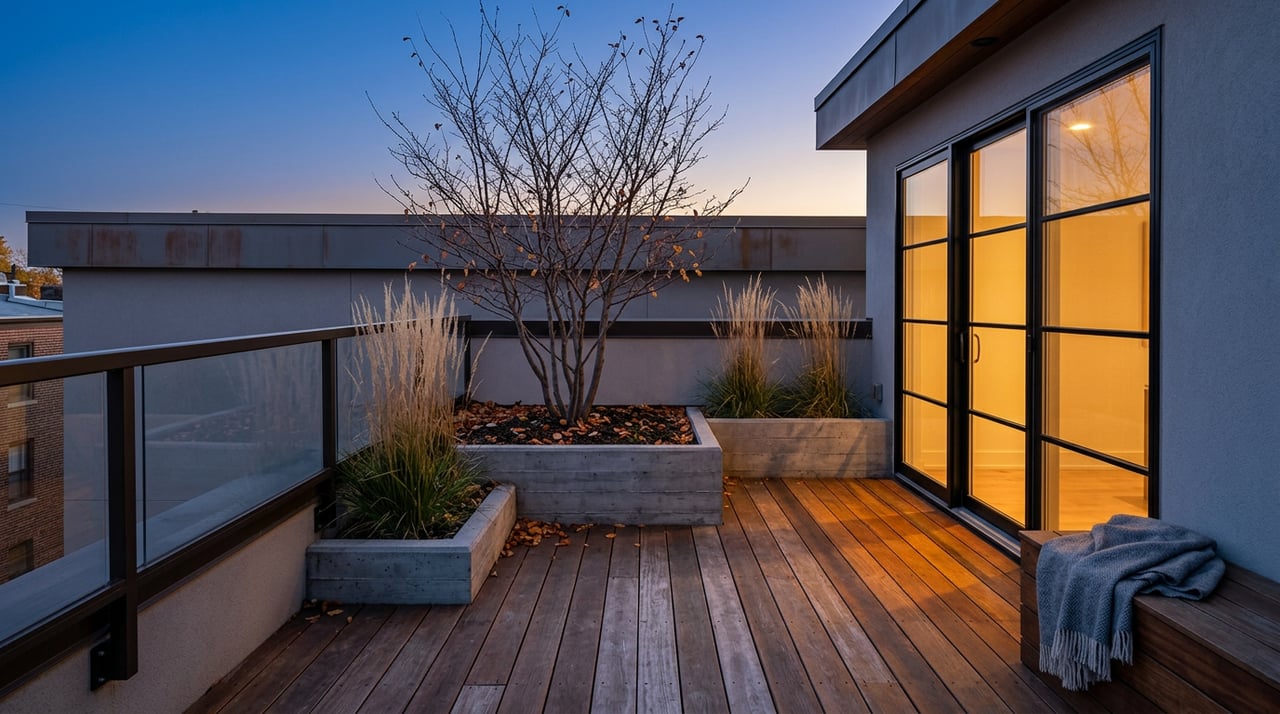
A few blocks north, Odell's Sloan's Lake Brewhouse at 1625 Perry Street runs a 10-barrel pilot system that brews beers available only at that location, poured out of a two-story taproom with a rooftop patio built for lake views. Across Sheridan Boulevard, the Edgewater Public Market has grown into a genuine food hall, with vendors like Black Box Bakery and Saigon Noodle Club now drawing their own foot traffic independent of the market's original anchor tenants.
A few blocks the other direction, into West Highland, Paperboy opened its first location outside Texas this spring in the former Rooted Craft space, joining a stretch of restaurants that already includes Root Down and Linger. Closer to the park itself, Stoney's on Raleigh Street continues to be the neighborhood's go-to for elevated comfort food and a rotating craft beer list, Rupert's across from the park on Sheridan draws the brunch crowd for its huevos rancheros, and Sloan's Bar and Grill on West 25th still runs the kind of classic neighborhood-bar menu that hasn't needed to change to stay busy.
What's Actually on the Calendar This Fall
With the Dragon Boat Festival behind it, the neighborhood's fall calendar shifts toward smaller, more local gatherings:
- Stoney's annual pumpkin carve, a longstanding tradition at the Raleigh Street location
- The Sloan's Lake Fall Bazaar, billed as Colorado's original shop-and-sip market, bringing local vendors to the shoreline
- Weekly yoga sessions in the park that run through the fall shoulder season, drawing a smaller but steady crowd than the summer months
- The 2.8-mile loop itself, which sees its heaviest foot and bike traffic once the weather cools enough to make the full circuit comfortable
None of these require the lake to be at any particular depth or clarity. They run on the neighborhood's calendar, not the watershed's.
What This Means If You Live Here
The lake and the neighborhood around it have quietly split into two different stories running on two different timelines. The lake's story is slow, environmental, and now finally funded, with real infrastructure work likely to unfold over the next several years rather than the next few months. The neighborhood's story is faster: a new restaurant every year or two, a brewery pouring beer you can't get anywhere else, a food hall filling in with vendors, a festival that keeps growing even through a year it had to move its own dates.
Understanding the difference is mostly useful for calibrating expectations. If you're waiting for Sloan's Lake to become swimmable, that was never on the table, permit or no permit, bond or no bond. If you're wondering whether the algae issues from 2024 mean the neighborhood itself is struggling, the restaurant openings and the return of the Dragon Boat Festival to its usual date say otherwise. The lake needs the next decade. The blocks around it are already living in a different one.
If you're weighing what a home near the park is actually worth given all of this, or curious how buyers and sellers around Sloan's Lake are pricing in a shoreline that's this actively in transition, The Denver Group knows this stretch of the city block by block. Let's Connect.