Xeriscaping is a landscaping approach that uses drought-tolerant, native plants and smart design to dramatically reduce outdoor water use — often by 50–75% compared to a traditional lawn. In 2026, with Denver Water under Stage 1 drought restrictions and water surcharges increasing summer utility bills, it’s one of the smartest long-term investments Denver homeowners can make.
Why Xeriscaping Matters Right Now in Denver
If you haven’t turned on your sprinklers yet this summer, Denver Water is quietly thanking you.
On March 25, 2026, Denver Water declared a Stage 1 Drought — its first in 13 years — affecting approximately 1.5 million people across Denver and the surrounding metro area, including Lakewood, Westminster, Arvada, and Thornton.
The trigger? Historically low snowpack levels in both the Colorado River Basin and South Platte Basin, combined with reservoir storage well below seasonal targets.
What That Means for Homeowners
Current water restrictions include:
- Mandatory two-day-per-week watering schedules
- No watering between 10am and 6pm
- Outdoor water use surcharges beginning May 2026
- Escalating fines for repeated violations
- Restrictions on installing new Kentucky Bluegrass lawns
Nearby cities including Aurora, Golden, Northglenn, Erie, Littleton, and Centennial have implemented similar drought measures.
And if conservation goals aren’t met this summer, stricter Stage 2 restrictions could follow.
The numbers make the case clearly:
- Traditional Kentucky Bluegrass lawns in Colorado can require 40–60 gallons of water per square foot annually
- Proper xeriscape landscapes typically use 10–15 gallons per square foot annually
That’s not a small efficiency gain. It’s a completely different relationship with Colorado’s climate.
What Is Xeriscaping?
The term “xeriscape” comes from the Greek word xeros, meaning dry, combined with “landscape.”
The concept was actually developed in Colorado — Denver Water coined and trademarked the term in 1981 as a framework for water-wise landscaping on the Front Range.
Despite the stereotypes, xeriscaping is not:
- A yard full of rocks
- A cactus garden
- A dry, lifeless landscape
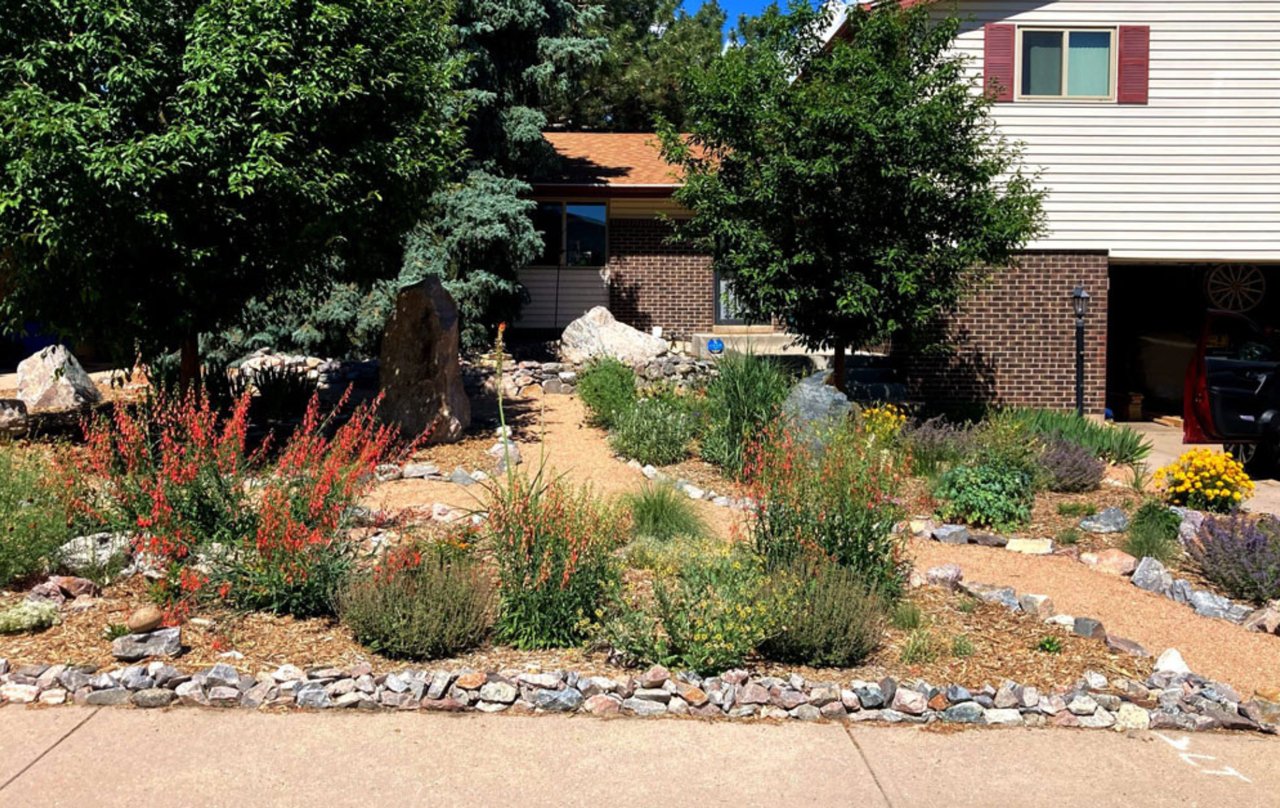
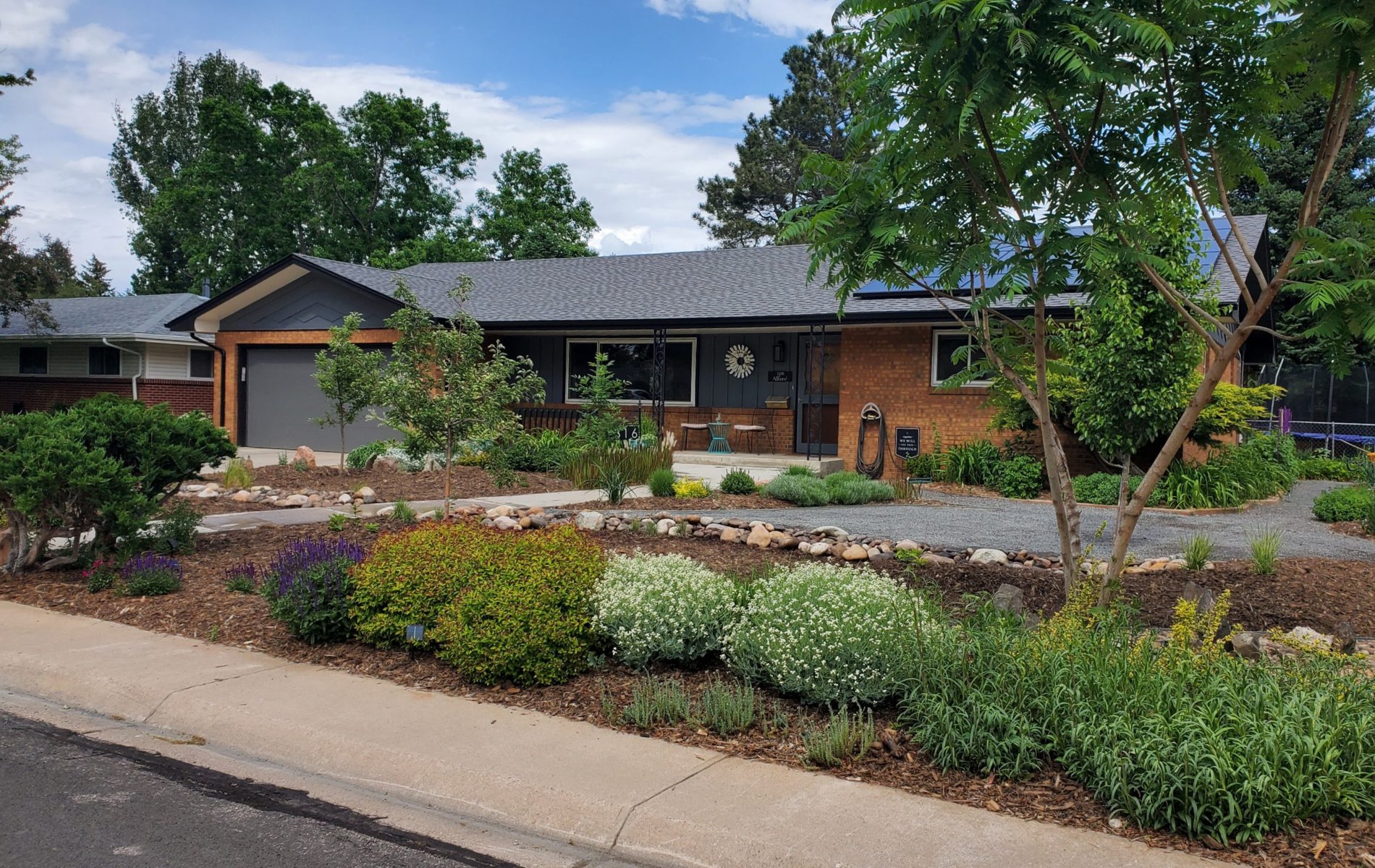
A well-designed xeriscape can feel lush, layered, colorful, and dynamic throughout the year. The difference is that it works with Colorado’s semi-arid environment instead of constantly fighting against it.
The 7 Principles of Xeriscaping
- Thoughtful planning and design
- Improving soil quality
- Choosing regionally appropriate plants
- Reducing unnecessary lawn areas
- Installing efficient irrigation
- Using mulch to retain moisture
- Maintaining plants properly
Best Colorado Native Plants for Xeriscaping in Denver
Colorado native plants evolved for the Front Range climate. They’re naturally adapted to:
- Intense sun exposure
- Dry summers
- Clay-heavy soils
- Sudden temperature swings
- Freeze-thaw cycles
- High elevation conditions
Once established, most require little supplemental watering.
Native Perennial Flowers
Blue Grama Grass (Bouteloua gracilis)
Colorado’s state grass and one of the best lawn alternatives for Denver yards.
Benefits:
- Heat and drought tolerant
- Handles light foot traffic
- Distinctive “eyelash” seed heads
- Great for meadow-style landscaping
Rocky Mountain Penstemon (Penstemon strictus)
A standout Front Range perennial with vivid purple-blue flowers that attract hummingbirds and pollinators.
Prairie Smoke (Geum triflorum)
Known for its unique feathery pink seed plumes that resemble drifting smoke.
Colorado Blue Columbine (Aquilegia coerulea)
Colorado’s state flower thrives in partial shade and reseeds naturally once established.
Blanket Flower (Gaillardia aristata)
One of the hardest-working xeric perennials in Colorado landscapes, blooming from early summer through frost.
Purple Coneflower (Echinacea purpurea)
A classic pollinator plant that also provides winter seed heads for birds.
Black-Eyed Susan (Rudbeckia hirta)
Adaptable, cheerful, and long-blooming — ideal for low-water gardens.
Yarrow (Achillea millefolium)
Extremely drought tolerant with soft, flat flower clusters and fern-like foliage.
Native Grasses and Ground Covers
Buffalo Grass (Bouteloua dactyloides)
The premier lawn replacement for Denver homeowners.
Why people love it:
- Minimal mowing
- Very low irrigation needs
- Soft texture
- Survives drought by going dormant naturally
Sideoats Grama (Bouteloua curtipendula)
Beautiful movement and texture, especially in meadow-style plantings.
Idaho or Sheep Fescue (Festuca idahoensis)
Fine-textured and excellent for slopes, borders, and rock gardens.
Snow-in-Summer (Cerastium tomentosum)
Silver foliage and white flowers make it ideal for hot curb strips and retaining walls.
Creeping Thyme (Thymus serpyllum)
Fragrant, colorful, and durable enough for pathways and stepping stones.
Native Shrubs
Apache Plume (Fallugia paradoxa)
One of the most visually striking native shrubs in Colorado with dramatic pink seed plumes.
Three-Leaf Sumac (Rhus trilobata)
Provides flowers, berries, and exceptional fall color while supporting birds and pollinators.
Rabbitbrush (Ericameria nauseosa)
Late-season yellow blooms make this a favorite for pollinator-friendly landscapes.
Mountain Mahogany (Cercocarpus montanus)
Excellent for erosion control and year-round landscape structure.
Leadplant (Amorpha canescens)
Unique silvery foliage adds contrast and texture to xeric gardens.
Drought-Tolerant Trees for Denver Landscapes
Gambel Oak (Quercus gambelii)
Perfectly adapted to Front Range conditions with incredible fall color.
Narrowleaf Cottonwood (Populus angustifolia)
Fast-growing shade tree with brilliant golden fall foliage.
Serviceberry (Amelanchier alnifolia)
Beautiful spring flowers, edible berries, and outstanding seasonal color.
Rocky Mountain Juniper (Juniperus scopulorum)
An evergreen backbone plant for Colorado-native landscapes.
Colorado HOA Rules and Xeriscaping Laws
Colorado homeowners have important legal protections when it comes to water-wise landscaping.
In 2021, Colorado passed House Bill 21-1229, which prevents HOAs from:
- Requiring water-intensive turf grass
- Penalizing homeowners for xeriscaping
- Prohibiting drought-tolerant landscaping
That means HOAs cannot legally force homeowners to maintain traditional bluegrass lawns during drought conditions.
Some neighborhoods may still regulate:
- Plant height
- Mulch types
- General appearance standards
But the right to xeriscape is protected statewide.
Denver Water Rebates for Xeriscaping
Denver Water currently offers rebates through its Cash for Grass program.
Available incentives may include:
- $1.50–$2.00 per square foot for removing irrigated turf
- Rebates for smart irrigation controllers
- Drip irrigation conversion rebates
- Rain and freeze sensor rebates
Additional rebate programs are also available through utilities serving:
- Aurora
- Littleton
- South suburban districts throughout the metro area
Before beginning a project, always verify current rebate requirements and obtain pre-approval.
Useful resources:
How to Design a Xeriscape Yard in Denver
1. Divide Your Yard Into Water Zones
The best xeriscapes use “hydrozoning,” grouping plants by water need.
High-Water Use Areas
Near patios, entertaining spaces, or play zones where limited lawn still makes sense.
Moderate-Water Areas
Native perennials and shrubs requiring occasional deep watering.
Low-Water Areas
True xeric plants and native grasses that survive mostly on rainfall.
2. Prioritize the Hell Strip
The strip between the sidewalk and street is usually the hardest place to maintain traditional turf.
Best alternatives include:
- Buffalo grass
- Blue grama
- Creeping thyme
- Prairie smoke
- Snow-in-summer
These areas often produce the biggest water savings with the least effort.
3. Mulch Everything
Mulch is one of the highest-return investments in xeriscaping.
Benefits include:
- Reduced evaporation
- Fewer weeds
- Better soil health
- Cooler root systems
Aim for:
- 3–4 inches of natural wood mulch around all plantings
4. Upgrade to Drip Irrigation
Drip systems dramatically reduce evaporation compared to spray sprinklers.
Bonus: under current Stage 1 restrictions, drip irrigation systems are generally exempt from the two-day watering schedule.
Smart irrigation controllers from brands like Rachio and Rain Bird can automatically adjust watering schedules based on weather conditions.
Does Xeriscaping Increase Home Value?
Increasingly, yes.
As a Denver real estate trend, drought-tolerant landscaping is becoming a genuine selling point.
Benefits buyers notice include:
- Lower utility bills
- Reduced maintenance
- Better summer curb appeal
- HOA-compliant water conservation
- Long-term sustainability
The broader shift is important: Colorado’s definition of a “desirable yard” is evolving.
Ten years from now, established native landscapes may carry the same premium perception that updated kitchens do today.
Where to Buy Native Plants in Denver
Denver Botanic Gardens
The Plant Select program remains one of the best resources for Front Range-tested plants.
Tagawa Gardens
Excellent native plant inventory and knowledgeable staff.
Echter's Nursery & Garden Center
One of the largest selections of Colorado-appropriate plants.
High Country Gardens
Strong online selection of xeric and native plants.
Timberline Gardens
Great source for water-wise landscaping plants.
Additional resources:
FAQ: Xeriscaping in Denver
Does xeriscaping mean eliminating all lawn?
Not at all. Xeriscaping focuses on reducing unnecessary turf, not eliminating functional lawn space entirely.
How long do native plants take to establish?
Most need 1–2 growing seasons before becoming highly drought tolerant.
Will xeriscaping hurt resale value?
Poor landscaping hurts value. Well-designed xeriscaping generally helps it — especially during active drought years.
How much can xeriscaping reduce my water bill?
Many homeowners reduce outdoor water use by 40–60%, especially when converting large lawn areas.
Is xeriscaping expensive?
Costs vary widely:
- DIY projects may cost a few hundred dollars
- Professional installations can exceed $25,000
However, rebates and long-term water savings significantly offset costs over time.
Final Thoughts
Denver’s water challenges are not temporary.
The Front Range is adapting to long-term drought realities, and homeowners are increasingly designing landscapes that reflect the climate we actually live in.
Xeriscaping isn’t about sacrifice. It’s about creating a yard that:
- Looks beautiful year-round
- Supports pollinators and wildlife
- Uses dramatically less water
- Requires less maintenance
- Holds long-term value in Colorado’s evolving housing market
And increasingly, it’s the kind of yard buyers actively want.
Work With The Denver Group
Buying, selling, upgrading your outdoor space, or exploring Denver-area neighborhoods? The team at The Denver Group can help you navigate the market and maximize your home’s long-term value across the Front Range.
👉 Explore all Denver neighborhoods
👉 View the full Denver Neighborhood Guide
Featured Photo: waterwiseyards.org
Jason Dalbey is the principal and team lead of The Denver Group at Compass. He writes about Denver real estate, urban development, and homeownership trends across Colorado. Learn more at The Denver Group.